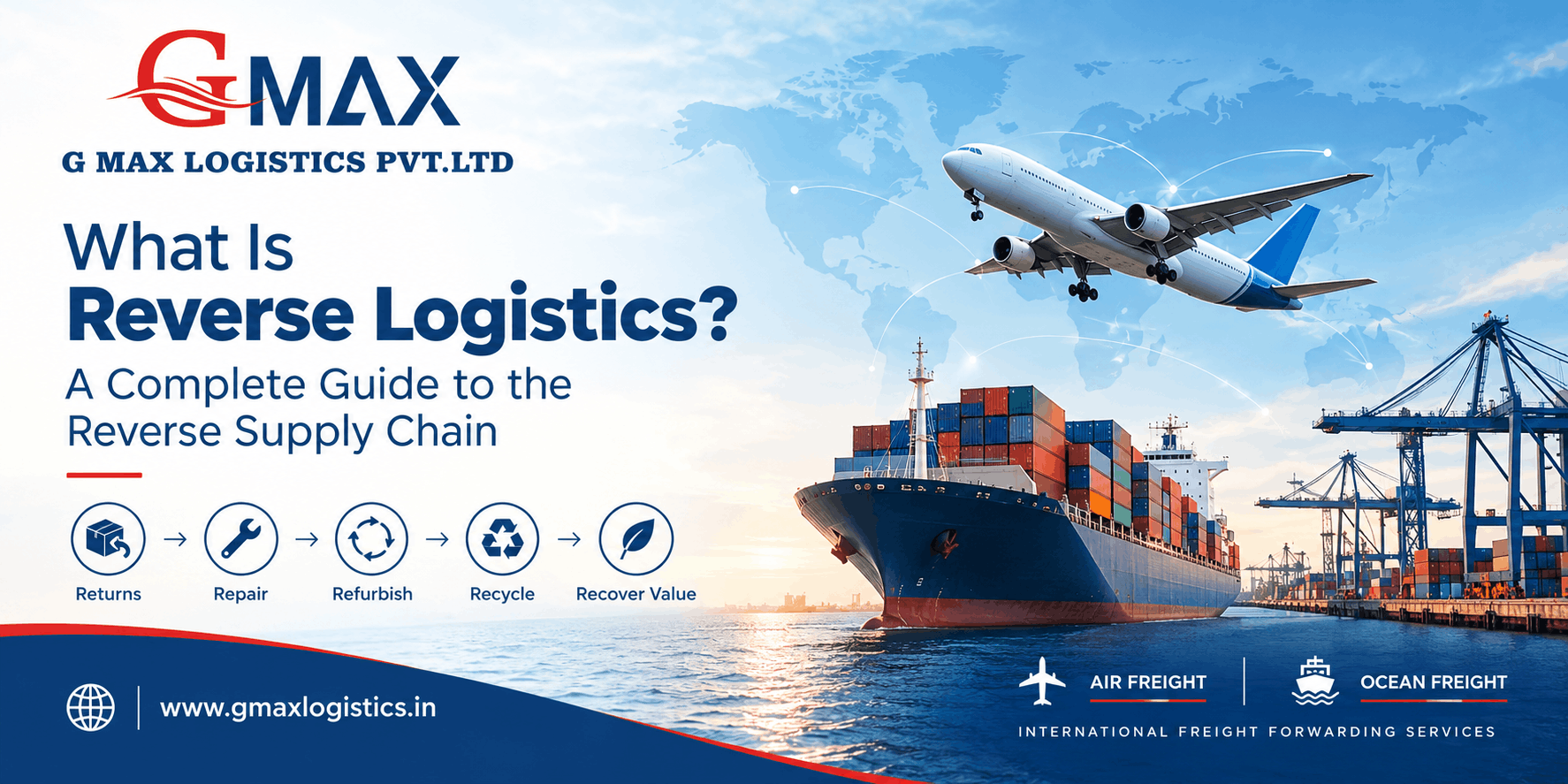
When a product moves from a manufacturer or seller to the customer, it follows the traditional supply chain. But what happens when the customer wants to return that product, a retailer needs to send damaged goods back, or an old product needs to be collected for recycling? This is where reverse logistics comes into play.
Reverse logistics refers to the process of moving products, materials, or goods backward through the supply chain. Instead of delivering products to the end customer, the process focuses on returns, repairs, refurbishment, recycling, replacement, resale, and responsible disposal.
For businesses, an efficient reverse logistics system can reduce unnecessary costs, recover value from returned products, and create a smoother experience for customers.
What Is Reverse Logistics?
Reverse logistics is the management of products and materials moving from their final destination back to the seller, manufacturer, distributor, or another designated location.
The process can begin for several reasons. A customer may return an unwanted item, a product may arrive damaged, a retailer may have excess inventory, or a manufacturer may need to recover defective components.
Once an item comes back, the business must decide what to do with it. Depending on its condition, it may be inspected, repaired, repackaged, resold, recycled, or disposed of safely.
In simple terms, reverse logistics manages the journey of a product after its original delivery.
Why Is Reverse Logistics Important?
Product returns are a normal part of modern commerce, particularly with the growth of e-commerce. Customers expect convenient return options, while businesses need to control the cost and complexity associated with returned goods.
A well-organized reverse logistics process can help businesses:
- Reduce losses associated with product returns
- Recover value from used or returned products
- Improve customer satisfaction
- Reduce unnecessary transportation and storage costs
- Support recycling and sustainable business practices
- Manage damaged and defective inventory more efficiently
- Improve inventory visibility and control
Without a proper system, returned products can remain in warehouses for extended periods, take up valuable space, and lose their resale value.
How Does Reverse Logistics Work?
Although the process differs between industries, reverse logistics generally involves several key stages.
- Product Return
The process begins when a product needs to move back from the customer, retailer, or another location. The return may be triggered by a damaged product, incorrect order, customer dissatisfaction, warranty claim, or product recall.
- Collection and Transportation
The returned item is collected and transported to a warehouse, distribution center, repair facility, or manufacturer. Efficient transportation planning is important because unnecessary trips can increase the overall cost of handling returns.
- Inspection and Sorting
After receiving the product, the business evaluates its condition. Items may be classified as unused, damaged, defective, repairable, reusable, recyclable, or unsuitable for further use.
- Recovery or Processing
The appropriate action is determined based on the product’s condition. A returned item may be cleaned and repackaged, repaired, refurbished, resold, or used for spare parts.
- Recycling or Disposal
Products that cannot be recovered may be sent for recycling or disposed of according to applicable environmental and safety requirements.
This structured approach helps companies recover as much value as possible while minimizing waste.
Read More: What Is 3PL Logistics? A Simple Guide for Businesses
Common Examples of Reverse Logistics
Reverse logistics is used across many industries.
- E-commerce: Customers return products that are damaged, incorrect, unsuitable, or simply no longer required.
- Electronics: Used phones, computers, batteries, and electronic components may be collected for refurbishment or recycling.
- Automotive: Defective parts, used components, and packaging materials can be returned to manufacturers or suppliers.
- Retail: Unsold seasonal inventory, damaged merchandise, and excess stock may be sent back to distribution centers or suppliers.
- Manufacturing: Companies may recover reusable materials, containers, equipment, and defective components from different locations.
These examples show that reverse logistics is not limited to customer returns. It can cover many types of product and material recovery.
Reverse Logistics vs. Traditional Logistics
Traditional logistics generally focuses on moving products from the manufacturer or supplier toward the customer. The primary objective is to deliver the right product to the right place at the right time.
Reverse logistics works in the opposite direction. It manages the movement of products or materials back through the supply chain for return, recovery, repair, reuse, recycling, or disposal.
Both processes require transportation, warehousing, inventory management, tracking, and coordination. However, reverse logistics is often more complex because returned products can differ significantly in condition and value.
Benefits of an Efficient Reverse Logistics System
A strong reverse logistics strategy can provide several long-term benefits.
- Lower Operational Costs
Businesses can reduce unnecessary transportation, storage, and handling expenses by processing returns efficiently.
- Better Customer Experience
Simple and reliable return procedures can make customers more comfortable purchasing products, particularly online.
- Increased Product Recovery
Repairing, refurbishing, or reselling suitable products allows businesses to recover value instead of treating every return as a complete loss.
- Improved Sustainability
Reusing products and materials can reduce waste and support more sustainable supply chain operations.
- Better Inventory Management
Tracking returned goods helps businesses understand where products are, what condition they are in, and what action should be taken next.
The Role of Technology in Reverse Logistic
Technology has made reverse logistics easier to manage and track. Businesses can use inventory management systems, barcode scanning, warehouse management software, GPS tracking, and data analytics to monitor returned products.
Automation can also help companies identify return patterns and understand why products are being returned. This information can reveal issues related to packaging, manufacturing, product descriptions, or order fulfillment.
By combining technology with reliable logistic services, companies can create better visibility across both forward and reverse supply chains.
Conclusion
Reverse logistics is an important part of modern supply chain management. It goes beyond simply accepting returned products—it involves collecting, transporting, inspecting, repairing, refurbishing, recycling, reselling, or responsibly disposing of products and materials.
As e-commerce continues to grow and businesses place greater emphasis on cost control and sustainability, an efficient reverse logistics process can become an important operational advantage. Companies that manage product returns systematically can recover value, reduce waste, improve inventory control, and provide customers with a more dependable overall experience.
For businesses dealing with frequent returns, damaged goods, reusable materials, or product recovery, reverse logistics should be treated as an essential part of the supply chain rather than an afterthought.