
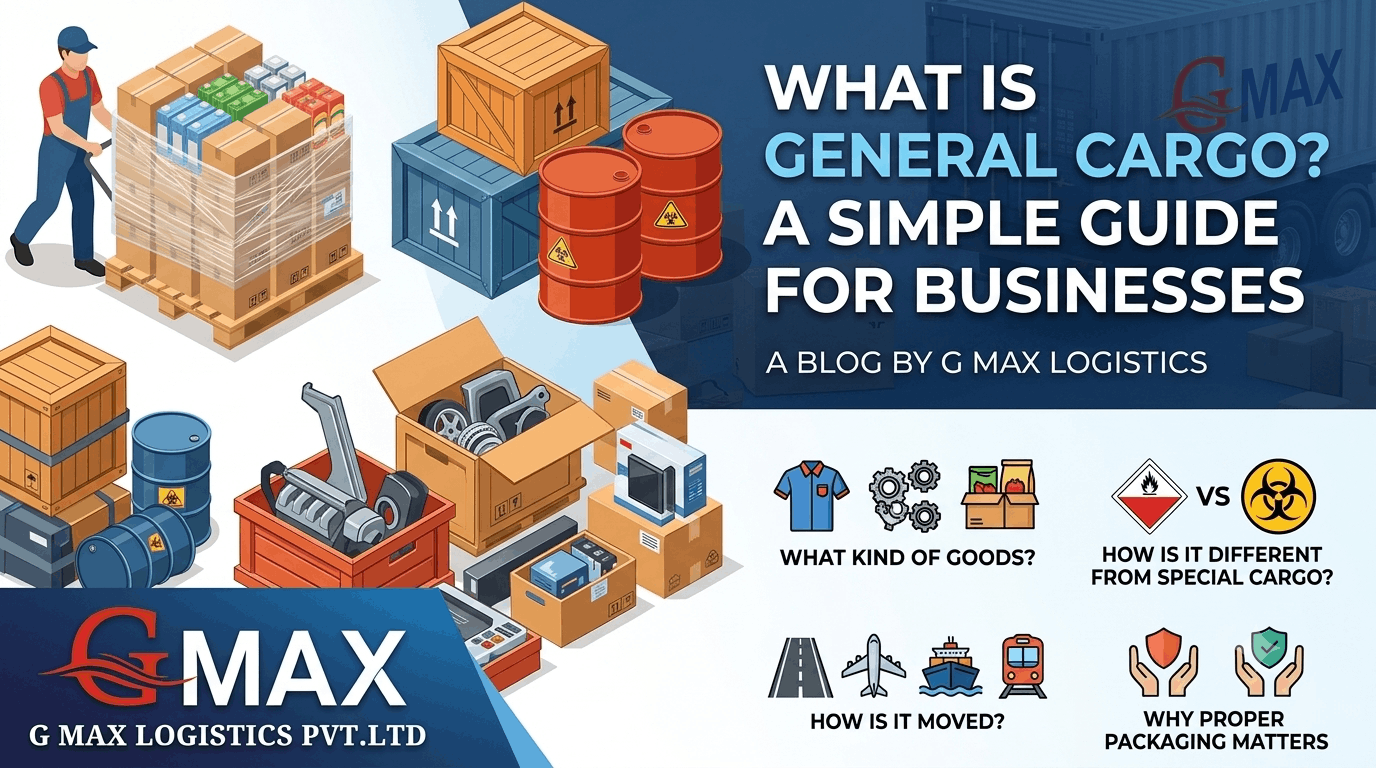
If you have ever shipped goods or dealt with freight services, you have probably come across the term general cargo. But what is general cargo, exactly? And why does it matter for your business?
In this blog, we break it down in the simplest way possible — no confusing jargon, just clear answers.
Understanding What is General Cargo
General cargo refers to goods that are packed and shipped as individual units. These could be boxes, bags, crates, pallets, or bundles. Unlike bulk cargo — which is poured or pumped in large quantities, like grain or oil — general cargo consists of items that hold their own shape and are handled piece by piece.
Think of it this way: if you order a box of machine parts, a pallet of packaged food, or a crate of furniture — that’s what is general cargo.
It is the most common type of freight moved across the world every single day. From small businesses sending out product samples to large companies shipping goods across continents, general cargo plays a central role in keeping supply chains running.
What Kind of Goods Fall Under General Cargo?
This is one of the most common questions people ask when learning what is general cargo. The answer is quite broad.
Here are some everyday examples:
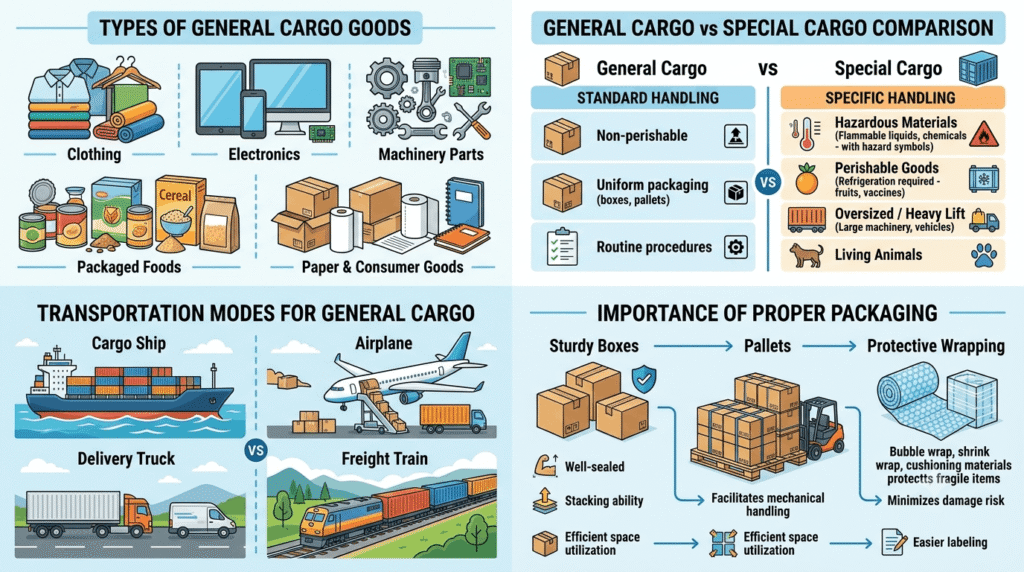
- Consumer goods — clothing, electronics, footwear, and home appliances
- Industrial goods — spare parts, tools, machinery components
- Food and beverages — packaged and processed items that do not need special temperature control
- Paper and stationery — books, office supplies, packaging material
- Agricultural products — bagged grains, pulses, and dry produce
- Building materials — tiles, pipes, fittings in packed form
Basically, if a product is packed, safe to handle in standard conditions, and does not require special storage like refrigeration or hazardous material handling, it likely qualifies as general cargo.
How is General Cargo Different from Special Cargo?
Not all freight is the same. Some goods need extra care — and that is where special cargo comes in.
Special cargo includes things like:
- Live animals
- Perishable food that needs refrigeration
- Hazardous or dangerous goods (like chemicals)
- Oversized or heavy machinery
- Valuables and high-security items
General cargo, on the other hand, does not need any of those special conditions. It can be stored and moved in standard environments, which makes it easier and more cost-effective to handle.
This is why general cargo shipping is so widely used — it is practical, flexible, and suits a huge range of products.
How Is General Cargo Moved?
General cargo can travel by road, rail, sea, or air — depending on the distance, budget, and delivery timeline.
- By Sea: Large shipping containers are loaded onto vessels. Each container can carry multiple shipments from different businesses — this is called LCL (Less than Container Load) or a full container for a single shipper, known as FCL (Full Container Load).
- By Air: For urgent shipments or high-value goods, general cargo is flown to its destination. Air freight is faster but costs more.
- By Road: Trucks and vans carry general cargo for domestic deliveries or last-mile delivery from ports and warehouses.
- By Rail: Rail freight is a reliable and cost-effective option for moving large volumes of general cargo across long inland distances.
Why Proper Packaging Matters for General Cargo
Since general cargo is handled multiple times during its journey — loaded, unloaded, stacked, and moved — proper packaging is very important.
Good packaging protects the goods from:
- Physical damage during handling
- Moisture or dust during transit
- Shifting and breakage inside containers
Using strong boxes, proper cushioning, and clear labelling ensures your general cargo reaches its destination in good condition. It also helps logistics providers handle your goods efficiently and safely.
Also Read: Why Pharmaceuticals Good Transportation Demands More Than Just Logistics
Why Businesses Choose G Max Logistics for General Cargo
At G Max Logistics, we understand that every shipment matters — big or small.
We provide end-to-end general cargo solutions across India and internationally. Whether you are moving a single pallet or a full container, our team ensures your goods are handled with care, delivered on time, and tracked at every step.
Here is what sets us apart:
- Experienced team with deep knowledge of domestic and international cargo movement
- Flexible freight options — road, air, and sea transport
- Competitive pricing with no hidden charges
- Real-time tracking so you always know where your shipment is
- Customer-first approach — we are always available to assist
We work with businesses of all sizes — from growing startups to established exporters — and we treat every general cargo consignment with the same level of care and commitment.
Final Thoughts About What is General Cargo…
So, what is general cargo? In short, it is any standard packed freight that does not require special handling conditions. It is the backbone of global trade and the most common type of shipment you will encounter in logistics.
Whether you are new to shipping or looking for a more reliable cargo partner, understanding these basics can help you make smarter decisions for your business.
If you are looking for a trusted logistics partner to handle your general cargo needs, G Max Logistics is here to help. Visit our website or get in touch with our team today.