
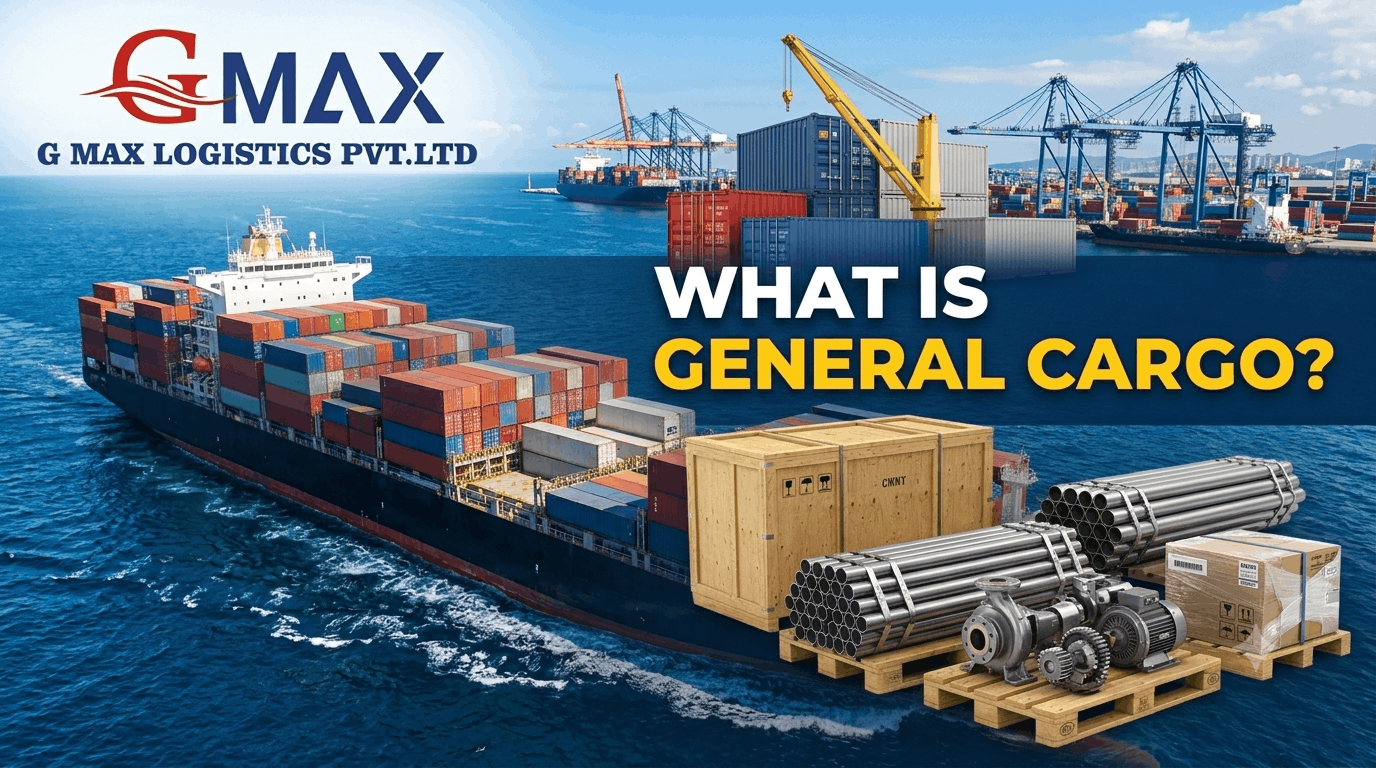
The global supply chain is a massive, complex network that moves billions of tons of goods across oceans every single day. If you are new to logistics or looking to expand your business’s supply chain footprint, you have likely encountered a variety of specialized terms. One of the most fundamental concepts you need to grasp is general cargo.
At G Max Logistics, we believe that understanding your freight options is the first step toward optimization. So, what is general cargo in shipping? Let’s break down exactly what this term means, how it is handled, and why it remains a cornerstone of international trade.
Defining General Cargo
In the simplest terms, general cargo refers to goods that must be loaded individually rather than in bulk. Unlike bulk cargo—such as loose coal, crude oil, or grains that are poured directly into a ship’s hold—general cargo consists of items that are packaged, counted, and tracked as discrete units.
Because these goods come in specific units, they require specialized handling, securing, and stowing. General cargo can encompass anything from a single pallet of electronics to giant pieces of industrial machinery.
The Two Main Subcategories
To fully understand what is general cargo in shipping?, it helps to look at how this freight is categorized based on its packaging and transport method:
- Break Bulk Cargo: This refers to traditional cargo that is transported as individual pieces. Examples include oversized crates, barrels of chemicals, bundles of steel rods, or massive vehicle components. These items do not fit into standard shipping containers and must be loaded directly onto the vessel using cranes.
- Containerized Cargo: This is the most dominant form of general cargo shipping today. Instead of loading items loose onto a ship, goods are packed into standard 20-foot or 40-foot intermodal containers. Containerization revolutionized the logistics world by making the transition between ships, trucks, and trains incredibly efficient.
Common Examples of General Cargo
Because the definition is so broad, general cargo covers a massive percentage of the consumer and industrial goods we use every day. Here are the most common types:
- Manufactured Goods & Electronics: Smartphones, household appliances, clothing, textiles, and footwear.
- Packaged Foodstuffs: Canned goods, boxed dry foods, and bagged agricultural products that do not require specialized liquid bulk tanks.
- Forest Products & Materials: Bundles of lumber, rolls of paper, and pallets of cardboard.
- Machinery & Automotive Components: Car parts, industrial generators, construction equipment, and manufacturing tools.
- Chemicals & Plastics: Safely packaged drums, barrels, or intermediate bulk containers (IBCs) containing non-hazardous or standard chemical compounds.
The Advantages of Shipping General Cargo
Choosing the right shipping method depends heavily on your budget, timeline, and the nature of your goods. For businesses utilizing general cargo, several distinct benefits stand out:
- High Versatility
The biggest strength of general cargo is its flexibility. Whether you are shipping a few boxes of retail inventory or a massive piece of mining equipment, the infrastructure exists to accommodate your freight. You aren’t restricted by the rigid requirements of bulk carrier vessels.
- Access to LCL (Less than Container Load) Shipping
If you don’t have enough goods to fill an entire 20-foot container, you don’t have to pay for the empty space. General cargo allows for consolidation. Through LCL shipping, your freight can share container space with goods from other businesses, dramatically lowering your transportation costs.
- Global Infrastructure Support
Nearly every commercial port, airport, and rail terminal in the world is designed to handle general cargo. Because standard containers and break-bulk handling practices are universal, your supply chain faces fewer geographic bottlenecks.
Key Challenges to Keep in Mind
While versatile, managing general cargo comes with operational nuances that require an experienced logistics partner:
- Labor-Intensive Loading: For non-containerized break-bulk items, loading and securing the freight requires skilled labor, specialized rigging, and careful weight distribution calculation.
- Higher Risk of Damage: Because cargo involves individual pieces or pallets being moved multiple times during transit, the risk of physical damage or shifting is higher compared to homogeneous bulk cargo. Exceptional packaging and crating are mandatory.
- Complex Documentation: Shipping diverse goods means managing varying customs codes, bills of lading, and compliance paperwork, especially if a single container holds mixed commodities.
Best Practices for Managing Your Cargo
If your business relies on general cargo shipping, implementing a few strategic practices can safeguard your bottom line:
- Invest in Superior Packaging: Ensure all items are properly palletized, shrink-wrapped, or crated. Sturdy packaging prevents internal shifting within a container.
- Accurate Weight and Dimension Tracking: Misdeclaring the weight or size of your freight can lead to severe port delays, fines, or rejected shipments. Always double-check your metrics.
- Partner with a Trusted Freight Forwarder: Logistics is more than just moving boxes from point A to point B. It requires customs expertise, route optimization, and real-time tracking capabilities.
How G Max Logistics Can Help
Navigating the complexities of international trade requires precision, deep industry knowledge, and a reliable network. At G Max Logistics, we specialize in tailormade freight solutions for all types of general cargo. From seamless containerized ocean freight to complex break-bulk movements, our team ensures your goods cross borders smoothly, safely, and cost-effectively.
Contact us today to request a quote and discover how we can streamline your supply chain operations.