
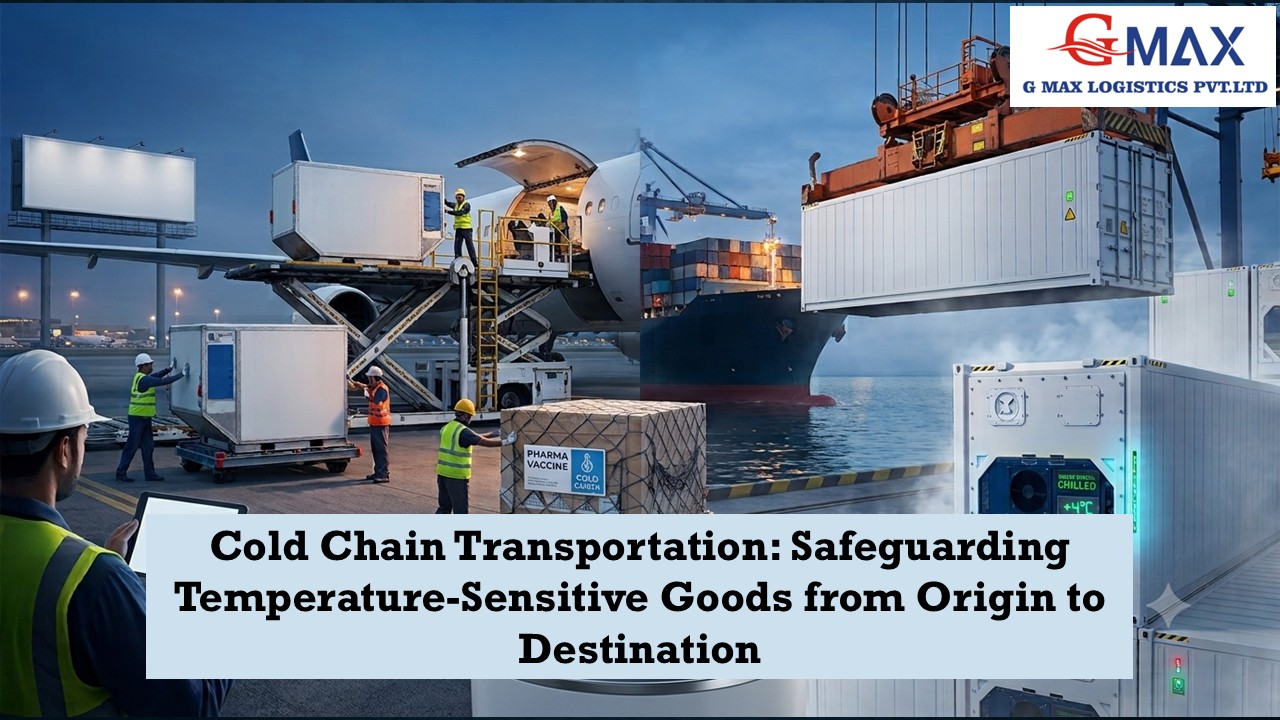
Transporting temperature-sensitive cargo requires far more than standard shipping routines. Whether you are shipping biopharmaceuticals, fresh agricultural produce, vaccines, or specialized chemicals, even a minor temperature fluctuation can compromise an entire consignment. That is where cold chain transportation comes into play. It provides a tightly controlled, thermal-managed supply environment that protects product integrity across every mile of transit.
At G Max Logistics, we recognize that moving perishable or regulated goods across domestic and international borders demands precision, specialized infrastructure, and absolute accountability. In this guide, we will explore why temperature-controlled freight is essential, how modern technology keeps cargo safe, and how choosing the right freight partner ensures your cargo arrives intact every time.
What is Cold Chain Transportation and Why Does It Matter?
At its core, cold chain transportation refers to the specialized movement of goods that must remain within specific, pre-determined temperature ranges throughout their journey. This continuous thermal chain stretches from the manufacturer or farm, through warehouses and transit hubs, right up to the final customer or medical facility.
Maintaining an unbroken temperature profile is vital for several high-stakes industries:
- Pharmaceuticals and Life Sciences: Biologics, vaccines, insulin, and active pharmaceutical ingredients (APIs) are chemically sensitive. A single thermal spike can render life-saving medications ineffective or hazardous, leading to millions in lost revenue and strict regulatory penalties.
- Perishable Food and Beverages: Fresh fruits, vegetables, seafood, meat, and dairy require precise chilled or frozen conditions to halt bacterial growth, extend shelf life, and maintain food safety standards.
- Specialty Chemicals and Electronics: Advanced manufacturing resins, photoresists, and raw chemical compounds often require low ambient temperatures during transit to prevent premature degradation or volatile chemical reactions.
Failure to maintain thermal boundaries during shipment leads to product spoilage, costly insurance claims, and reputational damage. This makes specialized cold chain logistics an essential strategic investment for global trade rather than just another transport expense.
Core Pillars of Effective Temperature-Controlled Shipping
Delivering temperature-sensitive cargo safely across air, sea, and land requires an integrated network of specialized hardware and strict operational standards.
Active and Passive Thermal Solutions
Depending on the cargo sensitivity, distance, and transit mode, shipments utilize either active or passive cooling systems:
- Active Systems: Refrigerated containers (reefers) and air-cargo containers equipped with built-in, powered cooling units that dynamically regulate interior temperatures.
- Passive Systems: High-performance insulated packaging, gel packs, dry ice, or phase-change materials (PCMs) designed to keep cargo cold inside sealed shippers without external power.
IoT-Driven Real-Time Telematics
Modern cold chain transportation relies heavily on digital visibility. Advanced IoT sensors and data loggers are placed directly inside cargo containers or individual boxes. These devices track temperature, humidity, light exposure, and GPS locations in real time, alerting operations teams immediately if a deviation occurs.
Pre-Cooling and Cross-Dock Handling
Temperature maintenance begins long before a vehicle moves. Pre-cooling the transport container to the exact target temperature before loading prevents thermal shocks. Furthermore, temperature-monitored cross-docking facilities ensure that cargo remains chilled during transit transfers.
Regulatory Compliance and Documentation
International pharmaceutical and food transport mandates strict adherence to standards such as Good Distribution Practice (GDP) and regional health authority requirements. Comprehensive paperwork, including temperature logs, origin certificates, and customs permits, must be managed meticulously to avoid transit delays at border checkpoints.
Major Challenges in Cold Chain Shipping and How to Overcome Them
Managing temperature-controlled freight involves overcoming persistent operational hurdles:
- Customs and Transit Bottlenecks: Delays at international ports or border crossings can exhaust passive cooling systems or reefer fuel, putting sensitive cargo at risk. Working with experienced freight forwarders who understand customs clearance prevents unnecessary holds.
- Extreme External Weather: Route planning must account for ambient temperature changes, such as shipping from freezing winter climates into tropical heat zones, ensuring refrigeration units can cope with external swings.
- Lack of Visibility: Outdated manual reporting leaves shippers blind to transit issues until delivery. Modern real-time tracking provides complete transparency throughout the trip.
Why Choose G Max Logistics for Your Cold Chain Needs?
At G Max Logistics, we know that when it comes to temperature-sensitive shipments, there is zero margin for error. As a trusted international freight forwarding partner, we offer tailored end-to-end solutions designed to protect your highest-value cargo across global routes.
Here is what sets G Max Logistics apart:
- Multi-Modal Expertise: Whether your shipment requires rapid air freight for urgent pharmaceutical products or cost-effective ocean reefer containers for bulk exports, we customize the optimal route for your schedule and budget.
- End-to-End Temperature Management: We coordinate every stage—from pre-conditioned packaging and dedicated reefer pickup to real-time telematics tracking and priority customs clearance.
- Strict Compliance & Integrity: Our team follows global GDP guidelines and carrier protocols to ensure complete audit trails, detailed thermal reports, and full compliance for healthcare and food consignments.
- Proactive Risk Mitigation: Our dedicated movement coordinators monitor shipments around the clock, intervening instantly to resolve potential delays before they impact cargo safety.
Partner with G Max Logistics Today
Maintaining product safety during cold chain transportation is not just an operational task—it is a promise of quality to your end consumers. Partnering with G Max Logistics ensures your temperature-sensitive shipments receive the care, visibility, and expertise they demand from pickup to final delivery.
Contact G Max Logistics today to discuss your temperature-controlled freight requirements and get a customized quote for your supply chain!