
Bangalore has become one of India’s busiest distribution hubs. With a strong manufacturing base, a booming e-commerce market and easy access to Chennai and Tuticorin ports, demand for warehouse space keeps rising. But a poor warehouse choice can quietly drain your margins through higher transport costs, damaged stock, compliance trouble and delayed deliveries.
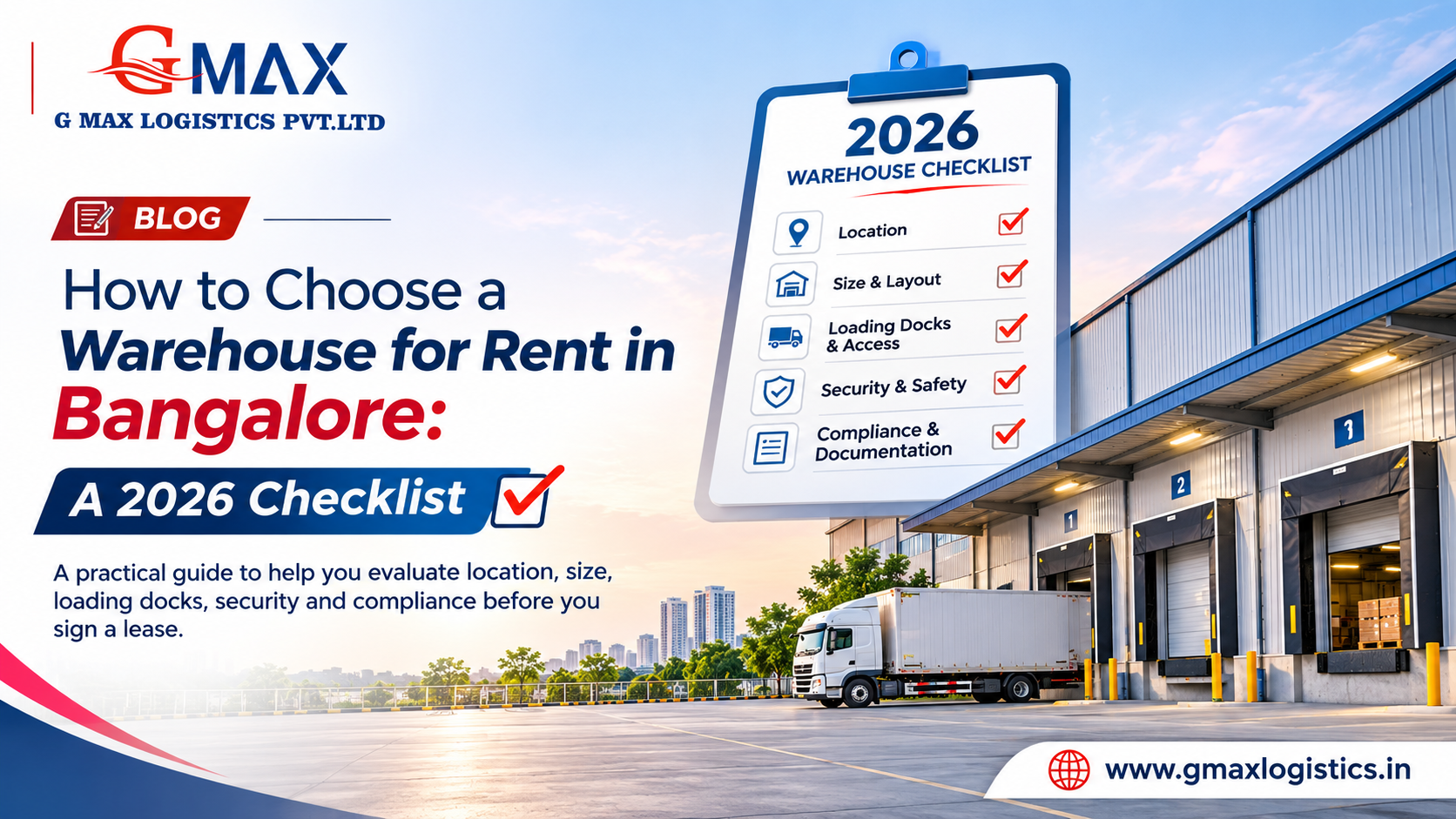
Before you sign a lease, use this checklist to compare your options with confidence.
1. Start with Location
Location affects almost every part of your logistics cost, so treat it as your first filter.
Know the main warehousing clusters. Bangalore’s warehouse activity is concentrated in a few corridors:
- Peenya and Nelamangala (North-West): an established industrial belt with good highway links to Tumakuru and Mumbai routes.
- Hoskote and Whitefield (East): convenient for Chennai-bound cargo and the eastern suburbs.
- Hosur Road, Electronic City and Attibele (South): ideal for Tamil Nadu connectivity and electronics supply chains.
- Devanahalli and Doddaballapur (North): close to the airport, suited to air freight and time-sensitive goods.
Match the location to your flow of goods. Ask where most of your inbound cargo comes from and where most of your deliveries go. If you import through Chennai, an eastern or southern location may cut your transit time. If you serve city customers, a site closer to the urban core reduces last-mile cost.
Check road and traffic conditions. A warehouse that looks close on a map can still be slow to reach if trucks face peak-hour congestion, narrow access roads or city entry restrictions for heavy vehicles.
2. Get the Size and Layout Right
Renting too much space wastes money. Renting too little forces expensive overflow storage.
- Estimate your current and future needs. Calculate your average stock volume, then add room for seasonal peaks and growth over the next 12 to 24 months.
- Think in cubic space, not just floor area. Clear height matters. A taller building with proper racking can store far more in the same footprint.
- Look at the floor plan. Columns, uneven floors and awkward corners limit how efficiently you can use the space. Open, column-free layouts are easier to organise.
- Consider flexibility. If your volumes fluctuate, ask whether the provider offers shared or on-demand space, or the option to scale up within the same facility.
3. Inspect Loading Docks and Access
Docks are where warehouse efficiency is won or lost.
- Dock height and number of bays. Check that dock levels suit the container trucks and trailers you use. Too few bays create queues and delays.
- Truck turning space. Large vehicles need enough room to manoeuvre and park without blocking the road.
- Container handling. If you receive 20 ft or 40 ft containers, confirm the facility can unload them smoothly.
- Handling equipment. Ask whether forklifts, pallet jacks or conveyor systems are available, and who is responsible for operating them.
- Operating hours. Round-the-clock access can be valuable if your shipments arrive at night or on tight schedules.
4. Prioritise Security and Safety
Your stock is your money. Protect it.
- Perimeter and access control: boundary walls, controlled gates, visitor logs and trained security staff.
- Surveillance: CCTV coverage of the yard, docks and storage areas, with recorded footage kept for review.
- Fire protection: sprinklers, extinguishers, smoke detection, clearly marked exits and regular fire drills.
- Protection from the elements: a leak-free roof, good drainage and proper ventilation, especially during monsoon.
- Pest control and cleanliness: essential for food, organic products and packaging materials.
- Special storage needs: if you handle pharmaceuticals, check for temperature-controlled zones and monitoring. If you store hazardous materials, ensure segregated and properly certified storage.
5. Verify Compliance and Documentation
Compliance problems can halt your operations overnight, so confirm these before committing.
- Clear property title and valid lease terms, with no ownership disputes.
- Required licences and permissions, including a valid trade licence, a fire safety certificate and any other local approvals for the premises.
- GST and tax readiness: make sure the location can be registered for GST so your business can operate without hurdles.
- Industry-specific requirements: pharmaceutical, food and hazardous-goods storage each come with their own regulations.
- Customs and bonded options: if you import or export, ask whether bonded warehousing is available to defer duty payments until goods are released.
- Insurance: clarify what the provider covers and what you must insure yourself.
Read More: What Is a Logistics Warehouse? Understanding Its Role in Modern Supply Chains
6. Look at Technology and Services
Modern warehousing is more than four walls and a roof.
- Inventory management: a warehouse management system (WMS) with real-time stock visibility saves time and reduces errors.
- Value-added services: pick, pack, labelling, kitting, returns handling and last-mile delivery can all simplify your operations.
- Reporting: regular stock reports, cycle counts and transparent documentation keep you in control.
7. Understand the Real Cost
Don’t compare only the rent per square foot. Ask for a full breakdown:
- Rent, deposit and escalation clauses
- Maintenance, utilities and security charges
- Handling, labour and equipment fees
- Minimum commitment periods and exit terms
A slightly higher rate with better location, security and services often costs less overall than a cheaper, poorly connected site.
8. Choose a Partner, Not Just a Property
The best warehouse is one backed by a team that understands your supply chain. A provider that also handles freight forwarding, customs clearance and transportation can connect every step, from port to warehouse to final delivery. That means fewer handovers, fewer delays and one point of accountability.
Quick Warehouse Checklist
- Is the location close to your suppliers, ports or customers?
- Does the size and clear height fit your stock now and next year?
- Are the docks, bays and truck access suitable for your vehicles?
- Is there 24/7 security, CCTV and fire protection?
- Are all licences, title documents and insurance in order?
- Does the provider offer WMS tracking and value-added services?
- Have you reviewed every cost, not just the rent?
Find the Right Warehouse with G Max Logistics
At G Max Logistics, we offer secure, well-equipped warehouse for rent in Bangalore, supported by freight forwarding, customs brokerage and a transportation fleet. Whether you need space for general cargo, pharmaceuticals or e-commerce stock, our team will help you find a setup that fits your goals and budget.
Ready to talk? Visit www.gmaxlogistics.in, call +91 94498 32229 or write to dominic@gmaxlogistics.co.in to request a free quote.
Frequently Asked Questions
What size warehouse do I need in Bangalore? It depends on your stock volume, product size and growth plans. Estimate your peak inventory, add a buffer for expansion, and consider clear height as well as floor area.
Which area is best for a warehouse in Bangalore? There is no single best area. Peenya and Nelamangala suit northern routes, Hoskote and Whitefield suit the east, Hosur Road suits southern and Tamil Nadu links, and Devanahalli suits air cargo.
Can I rent shared warehouse space instead of a full unit? Yes. Many providers offer shared or flexible space, which is ideal for growing businesses or seasonal stock.
Do I need a bonded warehouse? If you import goods and want to defer customs duty until the goods are cleared for sale, a bonded warehouse can improve your cash flow.