
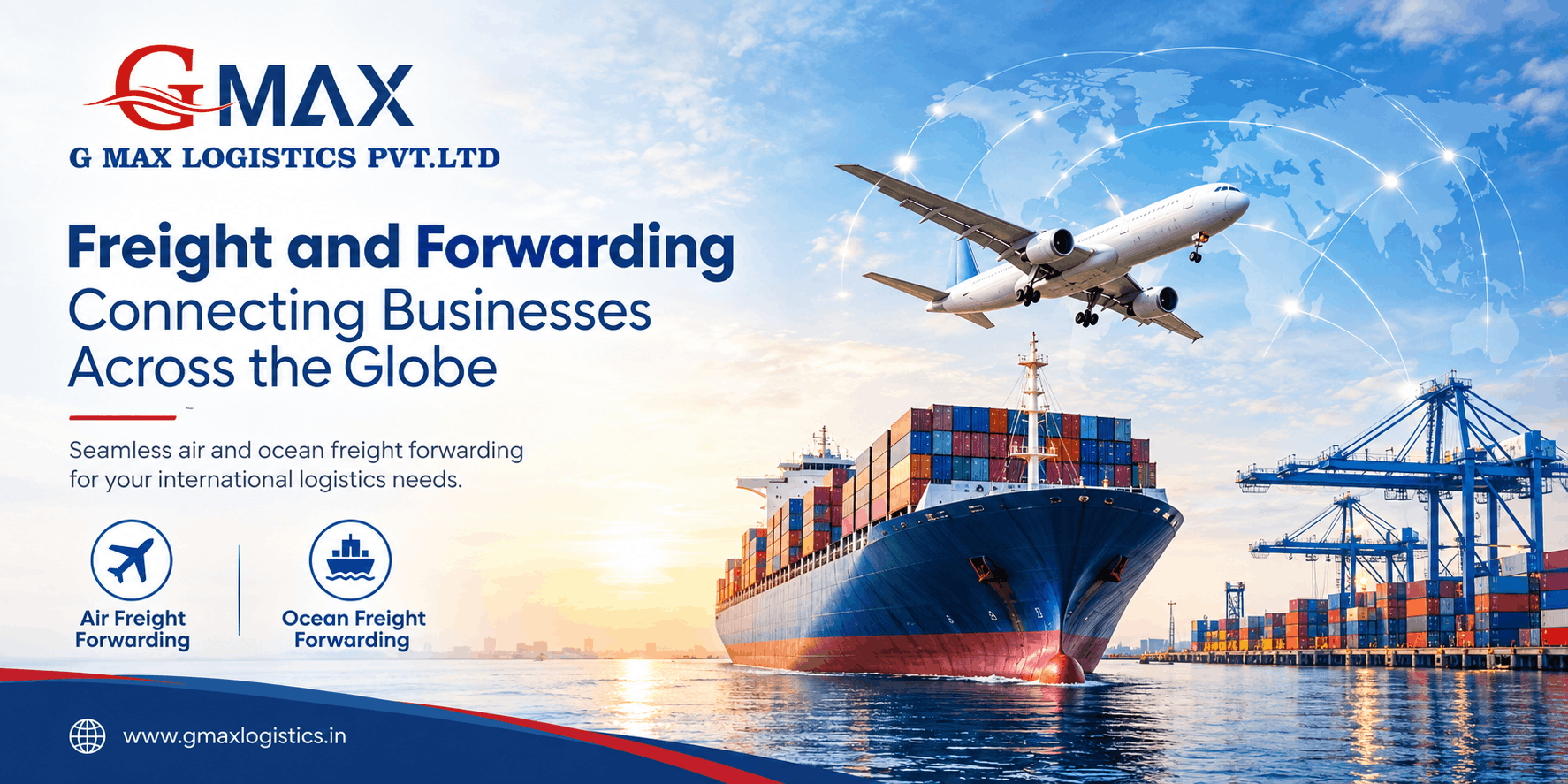
In today’s connected business environment, companies regularly move products across cities, countries, and continents. Whether it is raw material arriving at a manufacturing facility or finished products being delivered to an overseas customer, reliable transportation is essential. This is where freight and forwarding services play an important role.
Freight forwarding is not simply about moving cargo from one place to another. It involves planning shipments, selecting suitable transportation options, managing documentation, coordinating with carriers, and helping businesses navigate the complexities of domestic and international trade. A reliable freight forwarding partner can make the entire shipping process more organized, predictable, and efficient.
What Is Freight and Forwarding?
Freight and forwarding refers to the coordination and management of cargo transportation from its origin to its final destination. A freight forwarder generally works as a link between the shipper and different transportation providers, including shipping lines, airlines, trucking companies, warehouses, ports, and customs authorities.
Depending on the shipment, freight may travel by road, air, sea, rail, or a combination of several modes. The forwarder coordinates these different stages so that the cargo can move smoothly through the supply chain.
For businesses involved in importing or exporting goods, this coordination can save considerable time and reduce the burden of handling multiple logistics partners independently.
How Does Freight Forwarding Work?
The freight forwarding process usually begins with understanding the shipment requirements. The type of cargo, quantity, destination, delivery timeline, budget, and any special handling requirements are considered before selecting the appropriate transportation solution.
A typical process may include:
- Planning the most suitable transportation route
- Booking cargo space with carriers
- Arranging pickup and inland transportation
- Preparing and checking shipping documents
- Coordinating customs-related procedures
- Managing cargo consolidation when required
- Tracking shipments during transit
- Coordinating delivery at the destination
Every shipment can have different requirements. For example, a time-sensitive consignment may be better suited to air freight, while large-volume cargo may be more economical to transport by sea.
Read More: Air Freight Logistics: Why Speed Still Wins in Modern Supply Chains
Why Is Freight and Forwarding Important for Businesses?
Managing cargo movement can become complicated when multiple carriers, locations, documents, and regulations are involved. Freight forwarding brings these activities together under coordinated logistics management.
One of the major advantages is better control over the transportation process. Instead of communicating separately with different service providers, businesses can work with a forwarding partner that coordinates various stages of the shipment.
Freight forwarding can also help businesses make more informed decisions regarding routes, transportation modes, schedules, and shipping costs. Experienced logistics professionals understand the practical challenges involved in cargo movement and can identify suitable solutions based on the shipment.
Air and Ocean Freight Solutions
Two of the most commonly used options for international cargo are air freight and ocean freight.
Air freight is generally preferred when speed is a priority. It can be useful for urgent shipments, high-value products, samples, spare parts, and goods with shorter delivery windows.
Ocean freight is widely used for larger and heavier consignments. Full Container Load (FCL) and Less than Container Load (LCL) options allow businesses to choose solutions according to their cargo volume and requirements.
The right choice depends on several factors, including cargo size, destination, delivery deadline, and overall transportation budget.
The Role of Documentation and Customs
Documentation is one of the most important parts of freight forwarding. Errors or missing information can cause unnecessary delays, additional costs, or compliance problems.
Depending on the shipment, documents may include commercial invoices, packing lists, bills of lading, certificates of origin, and other trade-related paperwork. Customs procedures may also require specific declarations and supporting documents.
A professional forwarding partner helps coordinate these requirements and works with the relevant parties to keep the shipment moving according to applicable procedures.
Choosing the Right Freight Forwarding Partner
Businesses should look beyond pricing when selecting a freight forwarding company. A dependable partner should have experience, reliable carrier relationships, strong communication, and the ability to handle different types of cargo.
Technology is also becoming increasingly important. Shipment tracking and digital communication can provide better visibility into cargo movement and help businesses respond quickly when circumstances change.
Another important factor is the ability to provide customized logistics solutions. A small shipment, a full container, temperature-sensitive cargo, and oversized industrial equipment may all require completely different approaches.
Freight and Forwarding with G Max Logistics
At G Max Logistics, freight forwarding is supported by a broader logistics network that includes transportation, warehousing, ocean freight, air freight, and customs brokerage. The company provides logistics solutions designed around the specific requirements of businesses and their cargo.
With operational support across major locations in India and capabilities for international movement, G Max Logistics focuses on reliable coordination, shipment visibility, compliance, and secure cargo handling. Its logistics infrastructure allows businesses to manage transportation requirements through an integrated approach rather than relying on disconnected services.
For companies looking for dependable international freight forwarding services, choosing an experienced logistics partner can make a significant difference in managing international shipments efficiently.
Conclusion
Efficient freight and forwarding services are an important part of modern supply chains. From selecting transportation routes and arranging cargo space to managing documentation, customs coordination, tracking, and final delivery, freight forwarders help simplify many of the challenges associated with moving goods.
As businesses expand into new markets, having a dependable logistics partner becomes increasingly valuable. With the right combination of experience, technology, infrastructure, and customer support, freight forwarding can help businesses move their cargo with greater confidence while keeping their supply chains organized and responsive.