
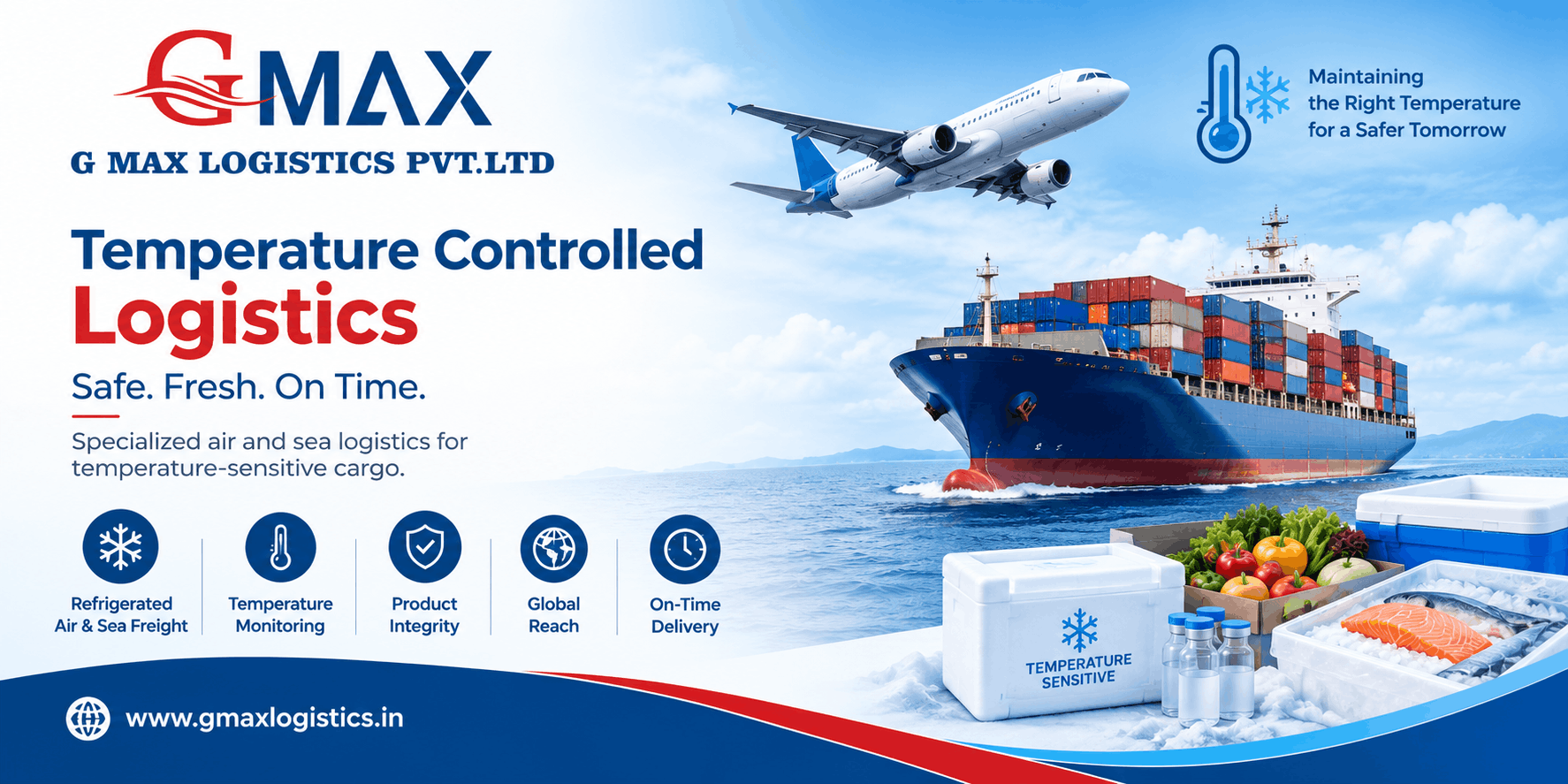
Modern businesses increasingly depend on products that cannot simply be stored or transported at normal room temperature. Fresh food, dairy products, pharmaceuticals, vaccines, seafood, frozen goods, flowers, and several other products require specific environmental conditions throughout their journey. This is where temperature controlled logistics plays an important role.
Temperature controlled logistics involves the storage, handling, transportation, and delivery of goods within a defined temperature range. The objective is simple: maintain product quality and safety from the moment an item leaves its origin until it reaches the customer. For businesses dealing with sensitive products, maintaining the right temperature is not just a logistics requirement; it is an important part of protecting product value and customer trust.
What Is Temperature Controlled Logistics?
Temperature controlled logistics is a specialized supply chain process designed for goods that can be damaged by unsuitable temperatures. Unlike conventional transportation, it uses dedicated equipment, storage facilities, monitoring systems, packaging, and operating procedures to maintain the required environmental conditions.
Depending on the product, temperature requirements can vary considerably. Some products need chilled environments, while others require frozen or controlled-ambient conditions. The appropriate range should be determined according to the product’s specifications rather than using a single standard temperature for every shipment.
A temperature-controlled operation can include:
- Refrigerated and climate-controlled warehouses
- Reefer trucks and specialized delivery vehicles
- Insulated containers and thermal packaging
- Temperature sensors and data loggers
- GPS and shipment monitoring systems
- Backup refrigeration and power systems
- Standard operating procedures for handling sensitive goods
The National Centre for Cold Chain Development identifies temperature-controlled storage, monitoring systems, packaging, refrigeration equipment, transportation, operating protocols, and trained personnel as important components of a temperature-sensitive supply chain.
Why Temperature Control Matters in Logistics
Temperature fluctuations can affect product quality, shelf life, appearance, safety, and usability. For perishable products, an extended period outside the recommended range can result in spoilage and unnecessary losses.
For pharmaceutical and healthcare products, temperature management can be even more critical because product quality may depend on maintaining specified storage and transportation conditions.
For food businesses, maintaining appropriate conditions helps preserve freshness and supports food safety. Recent industry guidance in India also highlights temperature monitoring, hygiene, traceability, suitable storage, vehicle hygiene, and proper handling as important elements of safe food distribution.
Reliable temperature control therefore helps businesses reduce wastage, protect inventory, maintain product consistency, and deliver products to customers in suitable condition.
Read More: Why Pharmaceuticals Good Transportation Demands More Than Just Logistics
Industries That Need Temperature Controlled Logistics
Several industries depend on temperature-managed transportation and storage.
- Pharmaceuticals and Healthcare
Medicines, vaccines, biological products, laboratory materials, and other healthcare products may require carefully controlled conditions. Specialized vehicles, monitoring equipment, insulated packaging, and documented handling procedures help protect these products during transportation.
- Food and Beverages
Dairy products, meat, seafood, frozen foods, processed foods, chocolates, and other perishables can require chilled or frozen transportation. Maintaining suitable conditions from warehouse to delivery point helps preserve quality and reduce spoilage.
- Fruits and Vegetables
Fresh produce is sensitive to temperature, humidity, handling, and transit time. Appropriate storage and transportation conditions can help extend shelf life and reduce losses between producers, distributors, retailers, and customers.
- Flowers and Other Perishables
Flowers and certain agricultural products can lose freshness quickly when exposed to unsuitable temperatures. Temperature-managed transportation helps businesses maintain product quality during longer journeys.
Key Components of Temperature Controlled Logistics
A successful temperature-controlled supply chain depends on more than refrigerated vehicles.
- Temperature-controlled storage: Warehouses may contain different zones for chilled, frozen, or controlled-ambient products.
- Refrigerated transportation: Specialized vehicles maintain the required conditions during transit and protect cargo from external temperature changes.
- Monitoring technology: Sensors and data loggers can continuously record temperature conditions, allowing businesses to identify potential deviations during storage or transportation.
- Specialized packaging: Insulated boxes, thermal containers, and other packaging solutions can provide additional protection, particularly during loading, unloading, and last-mile delivery.
- Trained staff: Employees handling sensitive products need clear procedures for loading, storage, transportation, and emergency situations.
- Contingency planning: Backup power, emergency response procedures, alternative vehicles, and route planning can help reduce risks caused by equipment failure, delays, or unexpected disruptions.
The Role of Technology
Technology is making temperature management more visible and measurable. Modern monitoring systems can provide information about temperature and shipment location throughout transportation. IoT-enabled sensors and digital tracking platforms can help logistics teams identify deviations and respond before they become larger problems.
For logistics operators, this visibility can also improve documentation and accountability. Instead of relying entirely on manual checks, businesses can maintain digital records of shipment conditions and review them when required.
Industry guidance also recommends continuous monitoring, in-transit tracking, standard operating procedures, and end-to-end visibility for temperature-sensitive supply chains.
Choosing the Right Logistics Partner
Businesses handling temperature-sensitive products should evaluate a logistics provider carefully. The right partner should have suitable vehicles and storage facilities, reliable monitoring systems, trained personnel, documented processes, and the ability to respond quickly when a problem occurs.
It is also important to consider the complete journey rather than transportation alone. Temperature control can be affected during loading, temporary storage, transfers, unloading, and final delivery. A well-planned logistics network should therefore minimize unnecessary handling and maintain suitable conditions at every stage.
Temperature Controlled Logistics with G Max Logistics
At G Max Logistics, reliable logistics is about more than moving goods from one location to another. Cold chain logistics require careful planning, appropriate handling, timely transportation, and attention to product-specific requirements.
As businesses expand their distribution networks, dependable temperature-controlled logistics can help them protect inventory, reduce avoidable losses, and maintain consistent service for their customers.
Whether the requirement involves temperature-sensitive food products, pharmaceuticals, perishables, or other specialized cargo, choosing a logistics partner with the right infrastructure and operational approach can make a significant difference.
Conclusion
Temperature controlled logistics has become an important part of modern supply chains where product quality depends on maintaining suitable environmental conditions. From specialized warehouses and refrigerated vehicles to monitoring technology, packaging, trained personnel, and contingency planning, every stage contributes to maintaining product integrity.
For businesses dealing with sensitive goods, effective temperature management can reduce spoilage, protect valuable inventory, improve operational visibility, and support dependable deliveries. As supply chains become more sophisticated, temperature-controlled transportation and storage will continue to play an important role in delivering products safely and efficiently across India.