
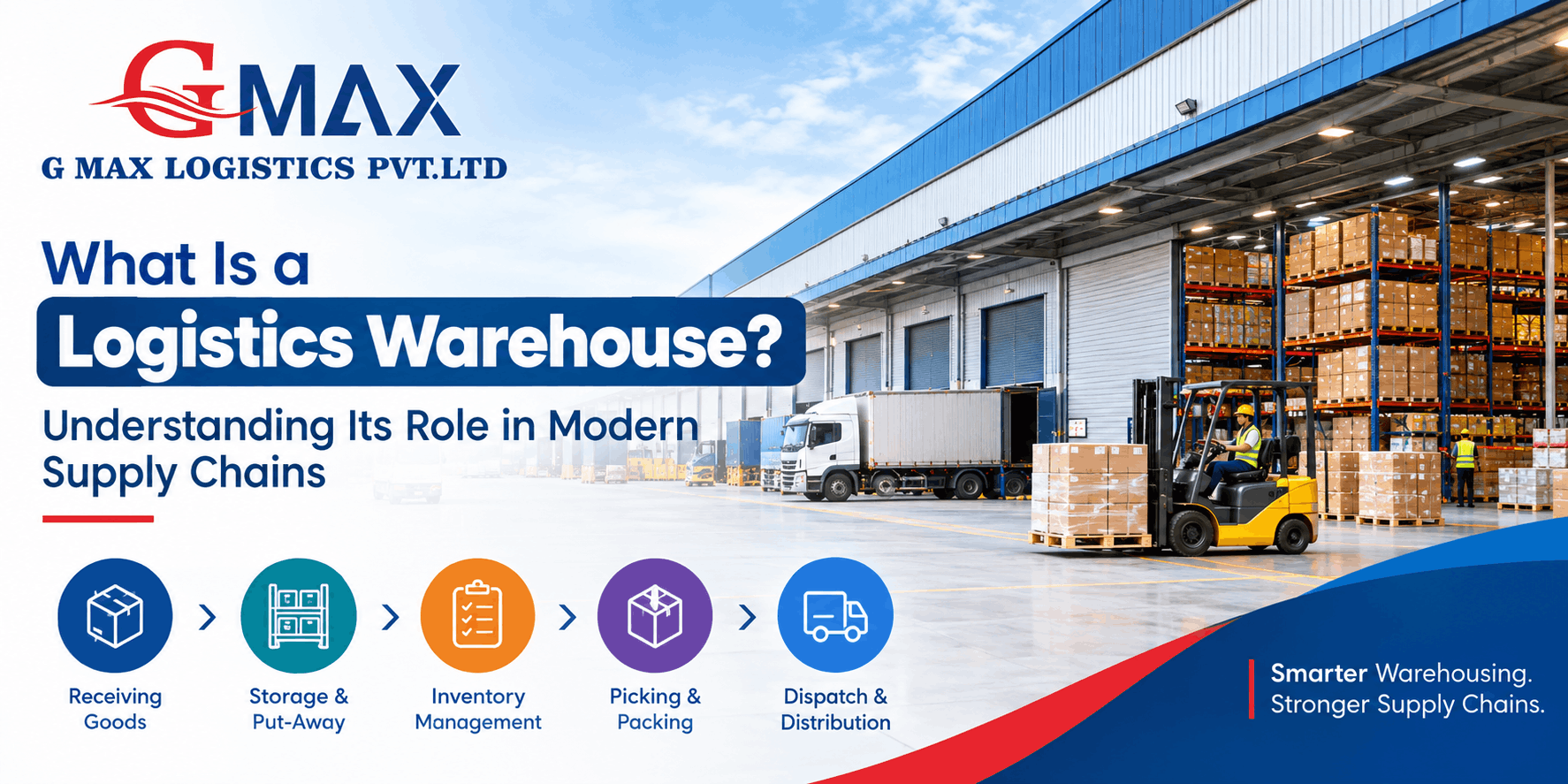
In today’s fast-moving business environment, getting products from a manufacturer to the customer involves much more than transportation. Before goods reach their final destination, they often need to be received, stored, organized, picked, packed, and prepared for dispatch. This is where a logistics warehouse becomes an important part of the supply chain.
A logistics warehouse is a facility designed to store and manage goods while supporting the movement of products from suppliers to businesses, retailers, or customers. Unlike a simple storage space, a modern warehouse can handle several activities, including inventory management, order processing, packing, dispatch, and returns.
What Is a Logistics Warehouse?
A logistics warehouse is a planned facility where products and materials are received, stored, monitored, handled, and dispatched according to business requirements.
The main purpose is not simply to keep products in one place. It is to make sure that the right goods are available at the right time, in the right quantity, and ready to move to the right destination.
For example, an e-commerce company may receive thousands of products from different suppliers. These products can be stored in a warehouse until customers place orders. Once an order is received, warehouse staff locate the products, pick the required items, pack them, label the shipment, and hand them over for transportation.
This organized flow helps businesses manage inventory while keeping their distribution operations efficient.
How Does a Logistics Warehouse Work?
Although warehouse operations vary depending on the industry and type of products, the basic process generally follows a structured flow.
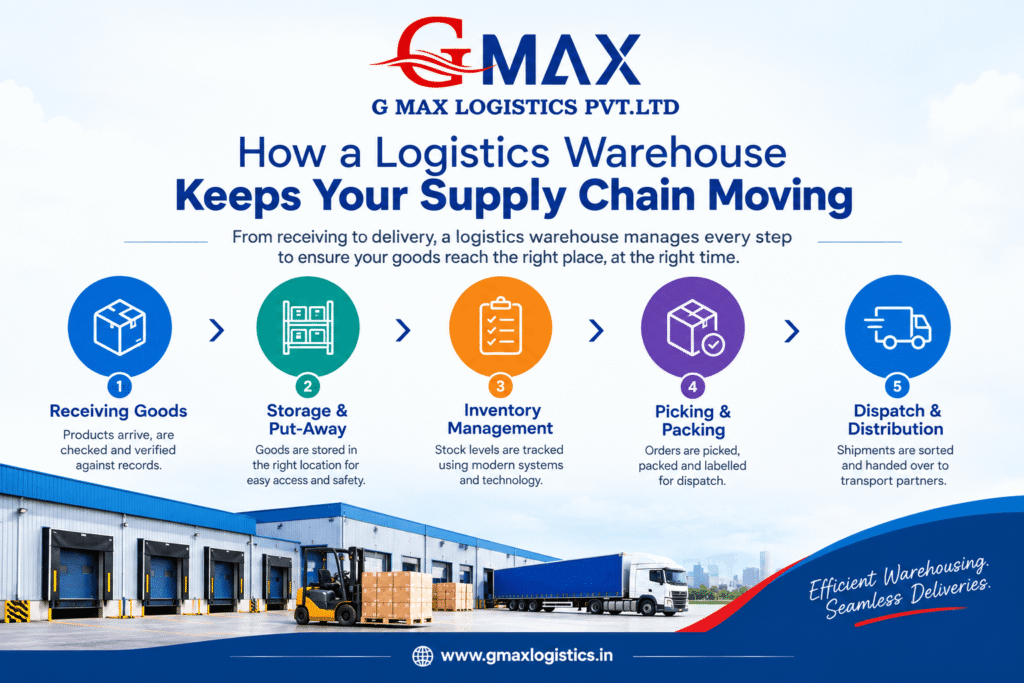
1. Receiving Goods
The process begins when products arrive at the warehouse. Staff check the shipment against the relevant documents and inspect quantities and product conditions. The goods are then recorded in the inventory system.
Accurate receiving is important because errors at this stage can affect stock records and subsequent orders.
2. Storage and Put-Away
After receiving, products are moved to their assigned storage locations. Depending on the nature of the goods, warehouses may use pallet racks, shelves, bins, floor storage, or specialized areas.
Products may be arranged according to their size, weight, SKU, demand frequency, or storage requirements. A well-planned layout allows workers to find products quickly and reduces unnecessary movement inside the facility.
3. Inventory Management
Inventory management is one of the most important functions of warehouse logistics. Businesses need to know how much stock they have, where it is located, and when it needs to be replenished.
Modern warehouses may use barcodes, scanners, warehouse management systems, and other digital tools to maintain accurate inventory records. Better visibility can reduce stock discrepancies and make order planning easier.
4. Picking and Packing
When an order is received, warehouse workers pick the required products from their storage locations. The items are then checked, packed, and labelled for delivery.
Efficient picking and packing can make a significant difference to order fulfillment. A well-organized warehouse reduces the time employees spend searching for products and helps minimize picking errors.
5. Dispatch and Distribution
Once an order has been packed, it moves to the dispatch area. Shipments are sorted according to their destination and handed over to the appropriate transportation provider.
The warehouse therefore acts as an important connection between inventory and transportation, helping products move smoothly toward their final destination.
Why Are Logistics Warehouses Important?
Warehouses play a key role in maintaining a reliable supply chain. Businesses cannot always manufacture, purchase, and deliver products at exactly the same time. Warehousing provides a buffer between supply and demand.
Some important benefits include:
- Better inventory control: Organized storage makes it easier to monitor stock levels and product movement.
- Faster order fulfillment: Products can be kept closer to customers or distribution points, helping businesses process orders efficiently.
- Reduced operational delays: A structured receiving, storage, picking, and dispatch process helps keep goods moving.
- Product protection: Proper storage helps protect goods from damage, environmental conditions, and unauthorized access.
- Improved transportation planning: Consolidating shipments in a warehouse can help businesses coordinate outbound transportation more efficiently.
Strategic warehouse locations can also reduce transportation distances and support faster movement of goods.
Read More: What is General Cargo? A Simple Guide for Businesses
Types of Logistics Warehouses
Not every warehouse serves the same purpose. Depending on business requirements, common types include:
1. Private Warehouses
These are operated or controlled by a particular business for its own inventory and supply chain activities.
2. Public Warehouses
Public warehouses provide storage and related services to multiple businesses, usually on a rental or service basis.
3. Distribution Centers
A distribution center focuses heavily on the movement and processing of goods. Products may spend less time there compared with traditional storage-oriented warehouses.
4. Cold Storage Warehouses
These facilities are designed for products that require controlled temperatures, such as certain food products, pharmaceuticals, and other temperature-sensitive goods.
5. Fulfillment Warehouses
These warehouses are commonly used by e-commerce and retail businesses for receiving inventory, processing customer orders, packing shipments, and coordinating dispatch.
What Should Businesses Consider When Choosing a Warehouse?
Selecting a warehouse is an important operational decision. Businesses should look beyond the available floor area and consider factors such as location, accessibility, storage capacity, security, loading and unloading facilities, technology, handling equipment, and transportation connectivity.
For businesses operating around major commercial hubs, finding suitable storage space can be an important part of supply chain planning. For example, companies researching a warehouse for rent in Bangalore may need to consider proximity to customers, highways, industrial areas, airports, and other transportation links before making a decision.
The right facility should match the company’s inventory volume, product characteristics, order frequency, and future growth plans.
Logistics Warehouse vs. Simple Storage
A basic storage facility primarily provides space for keeping goods. A logistics warehouse, on the other hand, is usually connected to a broader operational process.
Receiving, inventory tracking, order picking, packing, dispatch, and returns can all form part of warehouse operations. This distinction is particularly important for businesses that depend on regular movement of inventory rather than long-term storage alone.
Conclusion
A logistics warehouse is much more than a building filled with products. It is an important operational link between suppliers, manufacturers, distributors, retailers, and customers.
By combining organized storage with inventory management, order processing, product handling, and dispatch operations, warehouses help businesses maintain a steady flow of goods. As e-commerce, retail, manufacturing, and global trade continue to grow, efficient warehousing remains an essential part of modern logistics.
For businesses, choosing the right warehouse strategy can improve inventory visibility, support faster fulfillment, protect products, and create a more dependable supply chain.